
The Sarz Academy (TSA) is a creative education platform for people to break into the music industry. It's not just a course library. It's built around a full loop: learn a skill, prove you understand it, connect with mentors, and find real opportunities.
Before now, it existed as an offline program , camping students in a physical location for a set period to teach them. That history is part of why digitizing it mattered: there was already a real curriculum and a real alumni base.
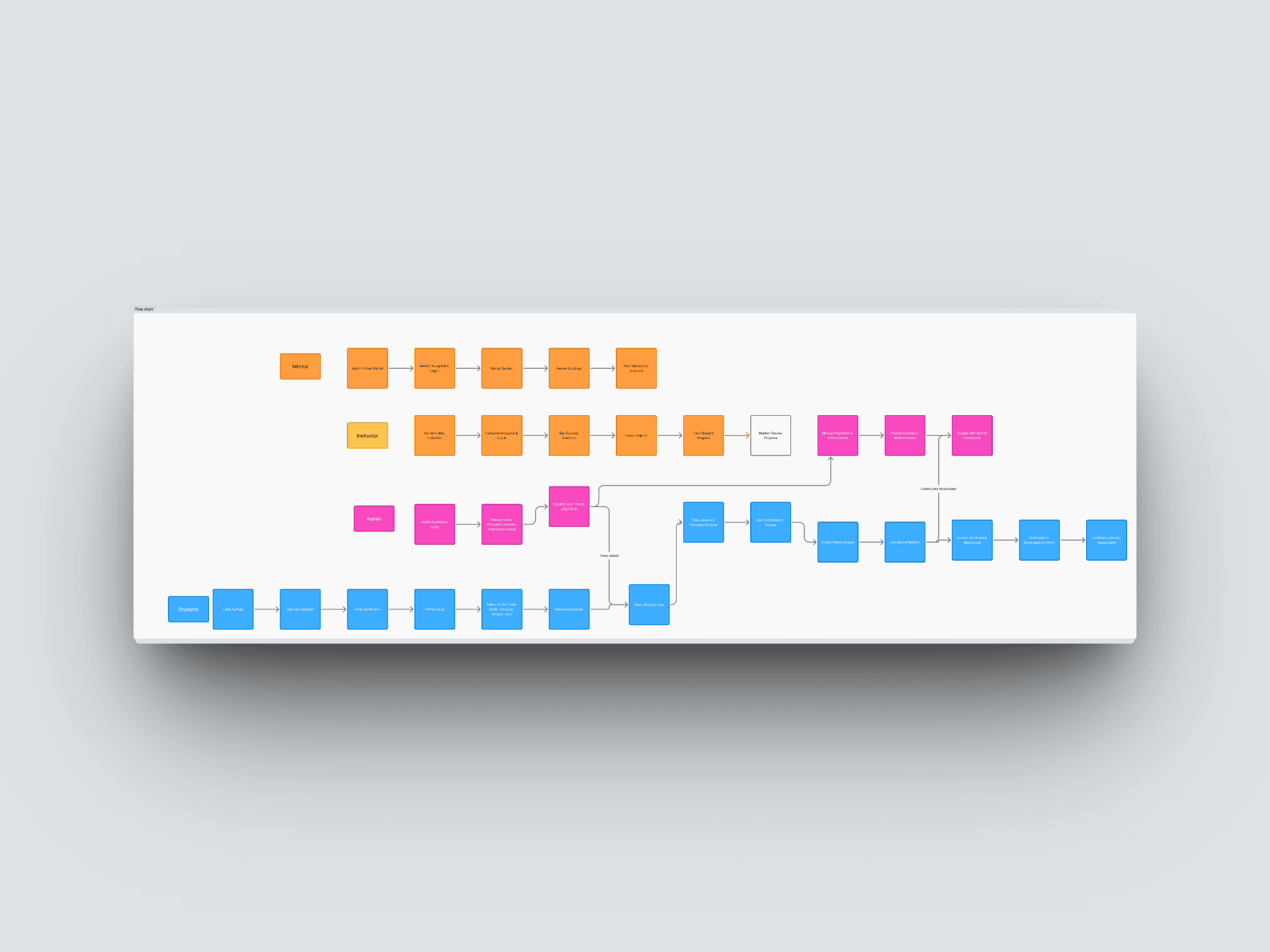
The platform operates as a multi-sided ecosystem serving four (4) distinct user types: students, mentor, instructor and admin and I designed the product end to end from initial conception to execution
Most online learning platforms solve one piece of the puzzle. Coursera-style platforms teach. LinkedIn-style platforms network. Job boards list jobs. Almost none of them connect the three.
A student can finish a course on most platforms and still be stuck asking the same questions: now what? Who do I learn from next? How do I turn this into a job? TSA needed to answer that
Stakeholders also highlighted that managing offline mentorship bookings, disconnected job listings, and unverified student project reviews manually created operational bottlenecks

Each module ends in a short, self-paced quiz requiring a minimum passing percentage that provides instant grading results. Conversely, each major course ends in an intensive project requiring instructor scrutiny.
To manage user expectations during slow reviews, the system pushes progress updates through synchronized in-app notifications and email alerts the moment a decision is finalized.
The Alumni section which features the alumni community, industry job boards, bootcamps and mentorship hub aren't open to every enrolled student . They unlock only after a student successfully completes at least one full track.
This gate was to ensure the alumni space remains occupied solely by individuals who have actually demonstrated competence.


During stakeholder conversations, I learned that TSA already had an alumni base from its offline programs and this raised an important question:how could these alumni access the new platform and its alumni section without having to repeat a learning journey they had already completed in person?
To address this, I designed a direct alumni invite flow into the admin portal , allowing admins to send eligible alumni a direct invitation to join the platform with alumni access already enabled.
I designed a system where course exists as a reusable block within the admin portal.
Courses are created and managed independently in the courses section. When creating a new learning track, admins can simply select and map existing courses into the track rather than building them inline from scratch.
This approach was designed with scalability in mind. As the catalogue grows, the same course can be reused across multiple tracks without redundant data entry or duplication, keeping the content structure clean and manageable as the platform expands.
[image slot:Track builder screen showing a course-picker step, with an existing course selected into the track's course order ]
IMPACT & LEARNING
The hardest part wasn't any individual screen, it was making sure a decision in one portal didn't quietly contradict a rule in another. I learned that designing a multi-sided platform is less about how each screen looks and more about whether the rules connecting them actually hold.
TSA is still in development and hasn't launched yet, so I don't have adoption or engagement numbers to point to. What the work did establish was the core experience across the platform for four user types, creating a foundation for the product to scale.


LET'S GET IN TOUCH
Have a project idea? I am here to help!